A restaurant menu helps customers order when it is short, easy to scan and clearly points them to the dishes you most want to sell. Group items into a few sections in the order people eat, give your best-sellers the best spot and a real photo, and keep prices clean and easy to find. Everything else, from fonts to paper, should make the menu quicker to read, not busier.
Here is how we approach menu design for restaurants in New York, whether it is a takeout menu, a dine-in card or a table tent.
Decide what the menu should sell
Before anyone opens a design file, sit down with your register reports and your kitchen team. You are looking for three kinds of dishes: the ones that sell the most, the ones that earn you the most, and the ones the kitchen can make well and fast during a rush. The dishes that land in more than one of those groups are your stars. The menu should be built around them.
This is also the moment to cut. Dishes that rarely sell, need their own ingredients or slow the line down make the menu longer and harder to read. A shorter menu helps people decide, keeps your ordering simple and cuts waste. Owners often worry that removing items will lose customers, but most people never notice a dish that nobody was ordering.
Lay it out the way people read
People do not read a menu from top to bottom like a book. They glance at the section headings, jump to what they are in the mood for, and look for a price. Make that easy:
- Use a few clear sections in the order people order: starters or sides, mains, wraps or sandwiches, drinks, desserts.
- Keep each section to a handful of items so it can be taken in at a glance.
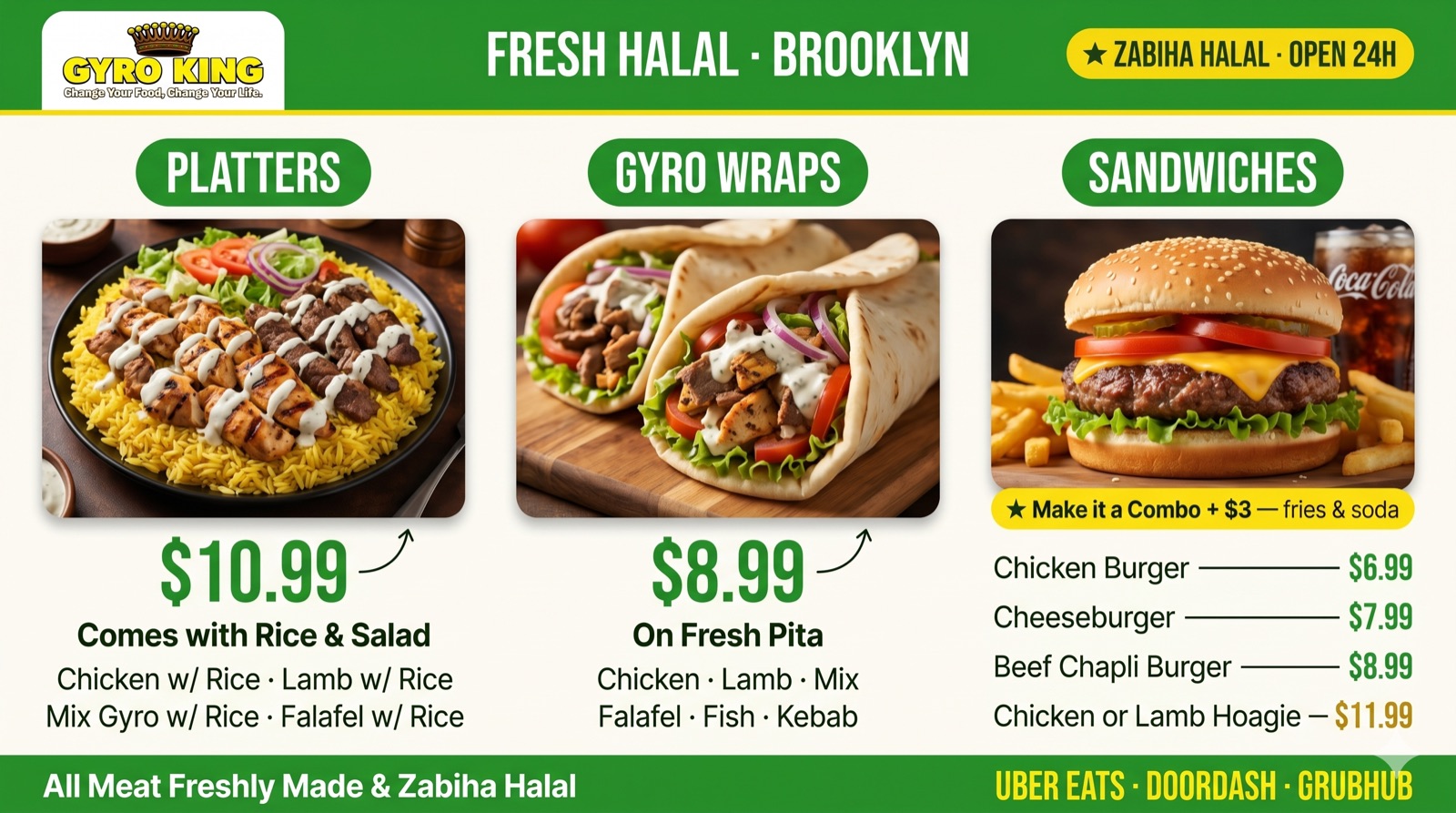
- Put your star dishes at the top of their section, or give them a box, a badge or a photo.
- Use one or two fonts at most, with headings large enough to read from arm's length.
- Leave white space. A crowded page makes every item look less important.
- On a takeout menu, put the phone number, address, hours and ordering QR code where nobody has to hunt for them.
Write descriptions that make people hungry
A good menu description is short and specific. Say what is in the dish, how it is cooked and what comes with it, in plain words a first-time customer understands. "Chicken gyro platter, served over rice with salad and garlic sauce" tells someone exactly what will arrive. Vague words like "delicious" or "amazing" take up space without helping anyone choose.
- Name the cooking method when it matters: grilled, charcoal, slow-cooked, fried to order.
- List what comes on the side so people know a platter is a full meal.
- Mark halal, vegetarian, spicy and common allergens with simple, consistent icons.
- Keep dish names the same on your menu, menu board, website and delivery apps.
If a customer has to ask what comes with it, the description is not finished yet.
Show prices clearly and honestly
Customers want to find the price without feeling tricked. Line prices up in one column or set them right after the description, in the same style throughout. Long dotted lines leading to a column of prices encourage people to read only the numbers, so many designers place the price at the end of the description instead. Whichever you choose, be consistent, and make sure every price matches your register and your online ordering exactly.
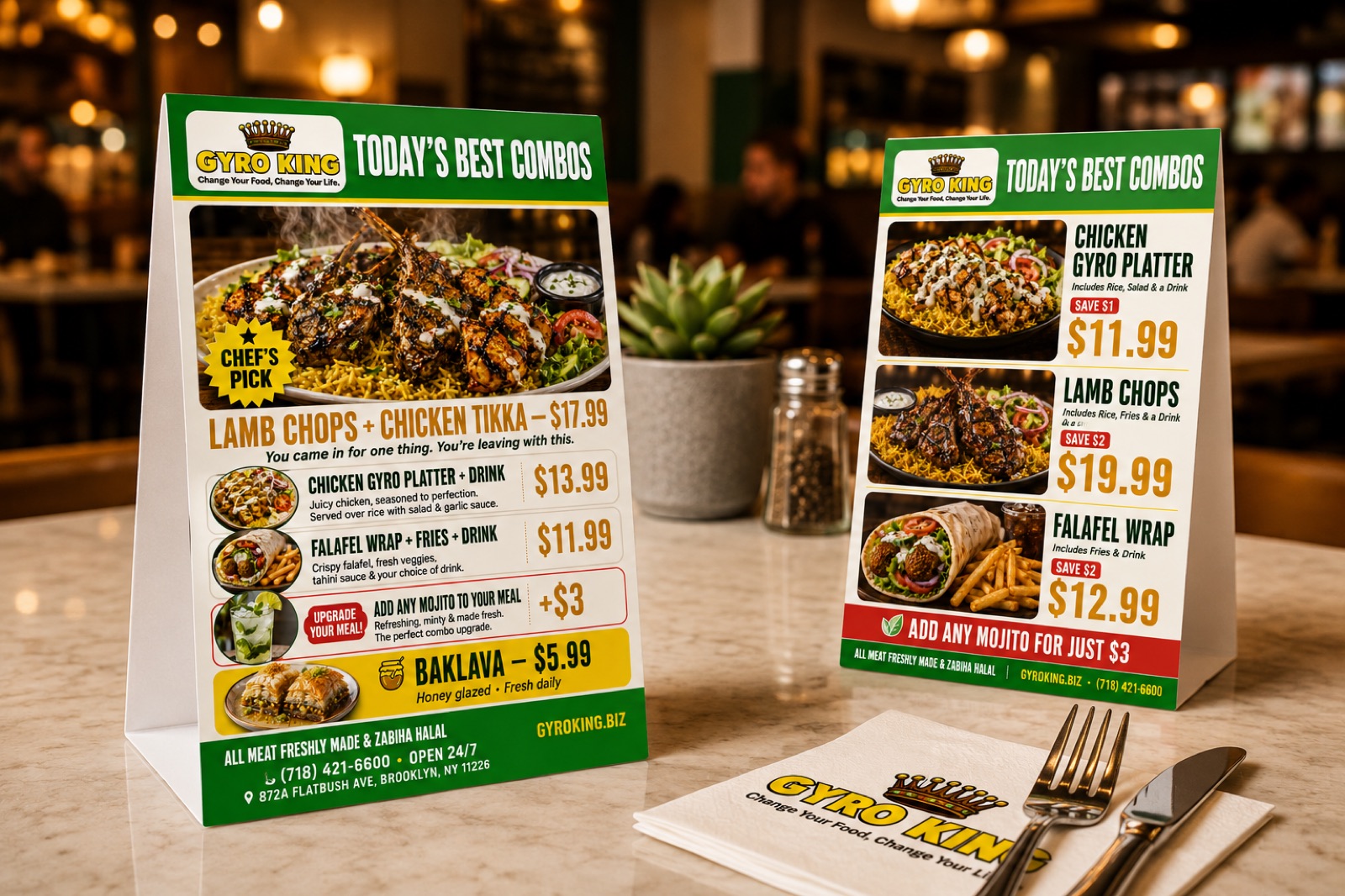
Combos and upgrades work well when they are easy to understand: what is included, what it costs, and how to ask for it. One clear add-on line under a section usually sells better than a crowded box of options.
Use real photos, and use them sparingly
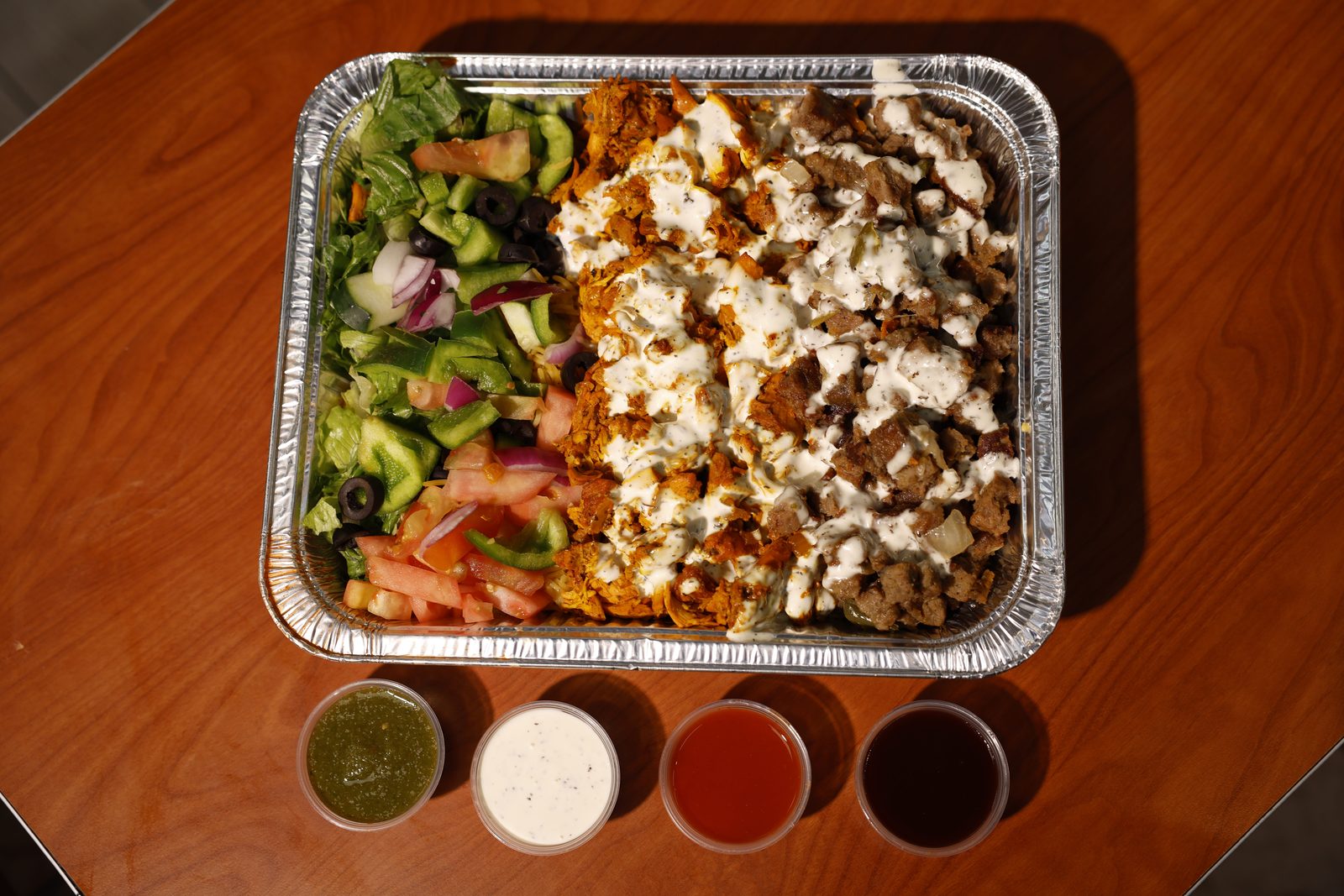
Photos sell food, but only when they show your food. A stock image of a dish that looks nothing like what arrives at the table leads to disappointed customers and bad reviews. Shoot your own best-sellers, plated the way your kitchen really serves them, in good light.
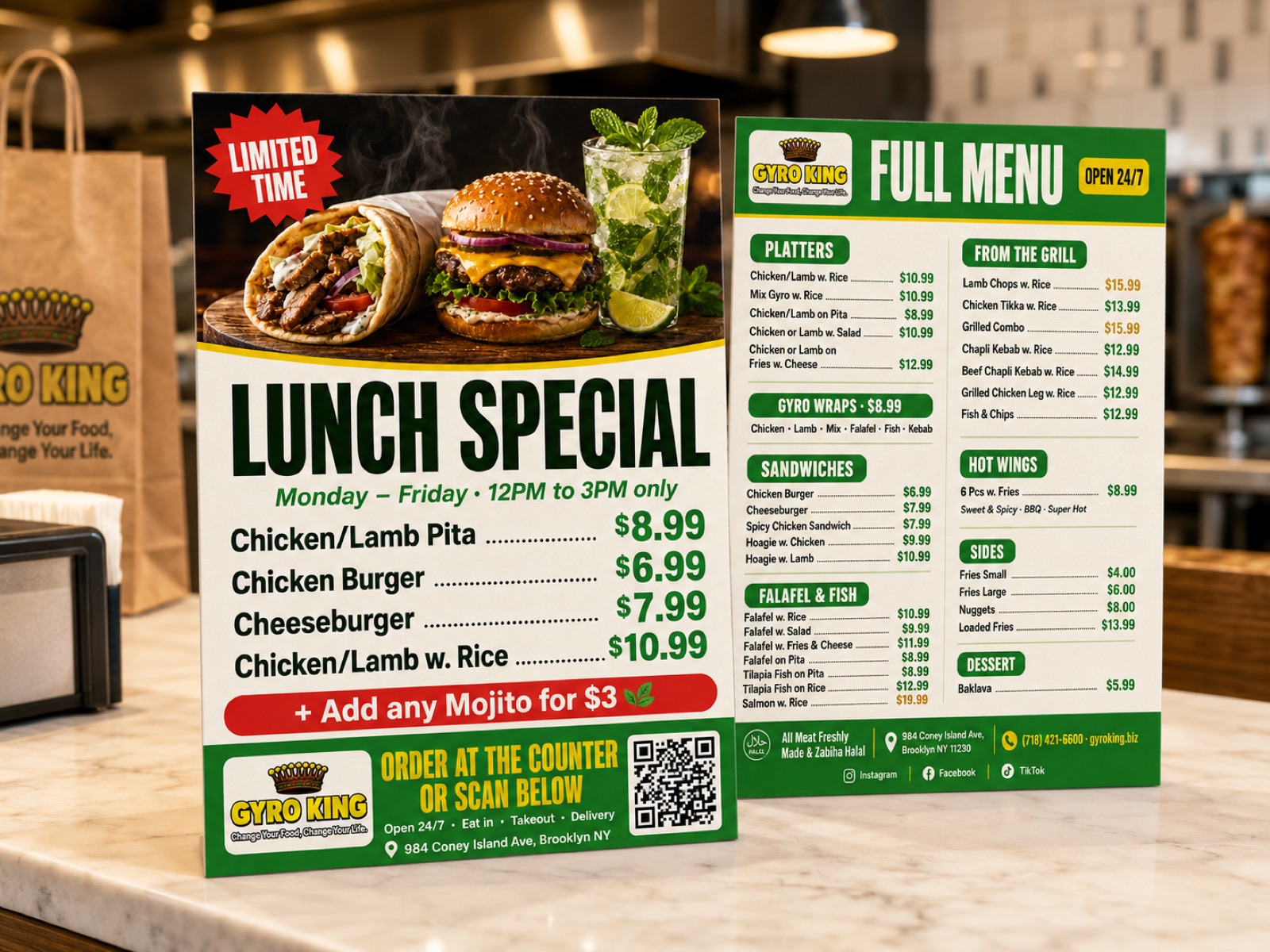
Then pick where photos go. A photo next to every item makes the page look like a catalog and pulls attention in every direction. A few strong photos of your star dishes guide the eye to exactly what you want people to order. On a table tent, one hero photo with a short headline is usually enough. For Gyro King, we photographed the platters and grilled dishes, then used those same photos across the table tents, menu flyers, catering menu and TV menu boards, so everything matches.
Test it before you print
- 01
Print one proof at full size
Screens hide problems. Hold the paper at arm's length, under your own dining room lighting.
- 02
Hand it to someone new
Ask a friend who has never eaten there to order from it. Watch where they look first and where they get stuck.
- 03
Check every detail
Prices against the register, phone number, address, hours, dietary marks, and every QR code scanned on two different phones.
- 04
Print a sensible quantity
Anything with prices will change. Smaller runs you can refresh beat a big stack that goes out of date.
If you want help with the design, the food photos or the printing, our restaurant printing page shows the kind of menus, table tents and flyers we make. For costs, see our pricing page or contact us with your menu and we will put together a quote.