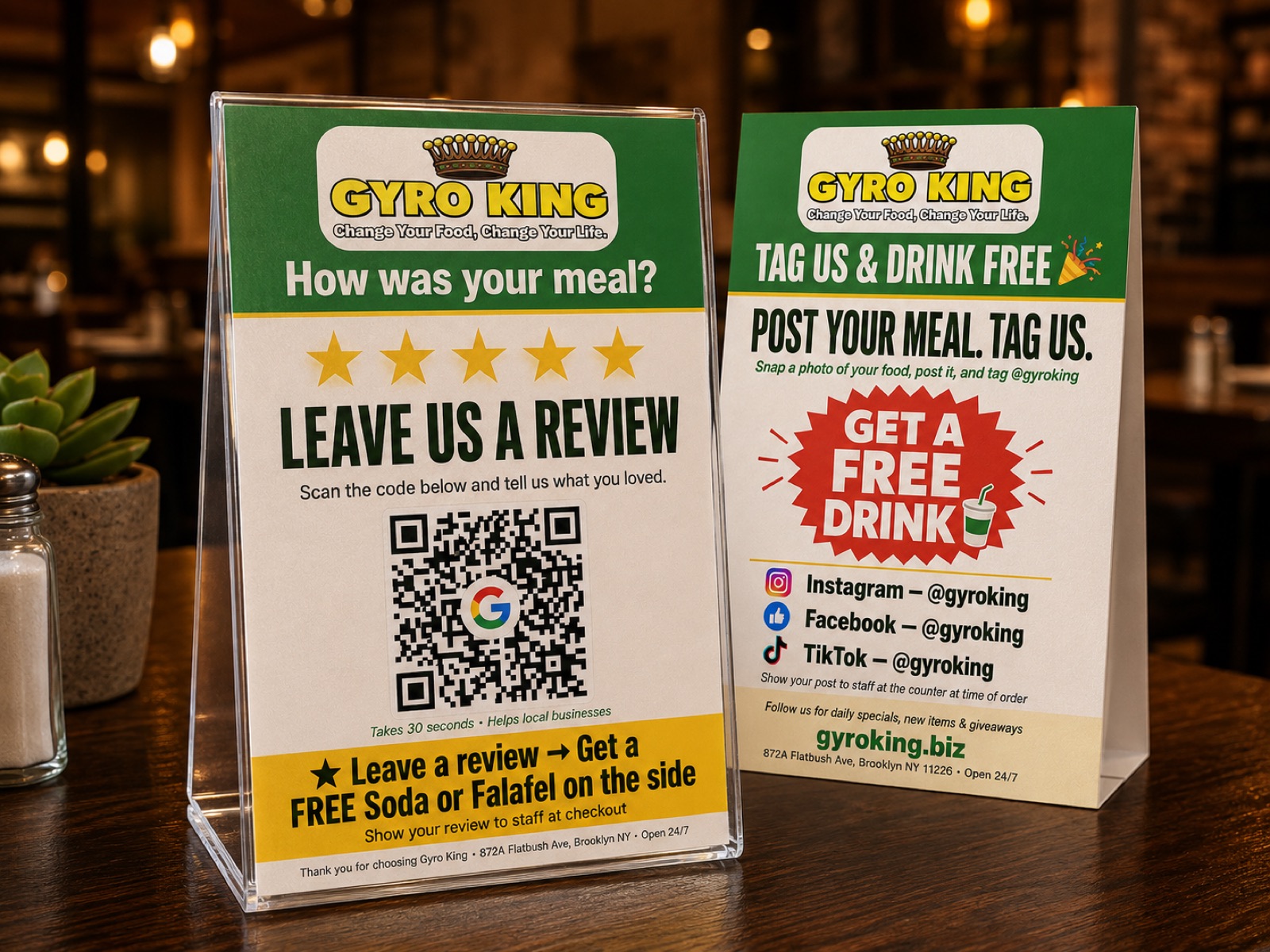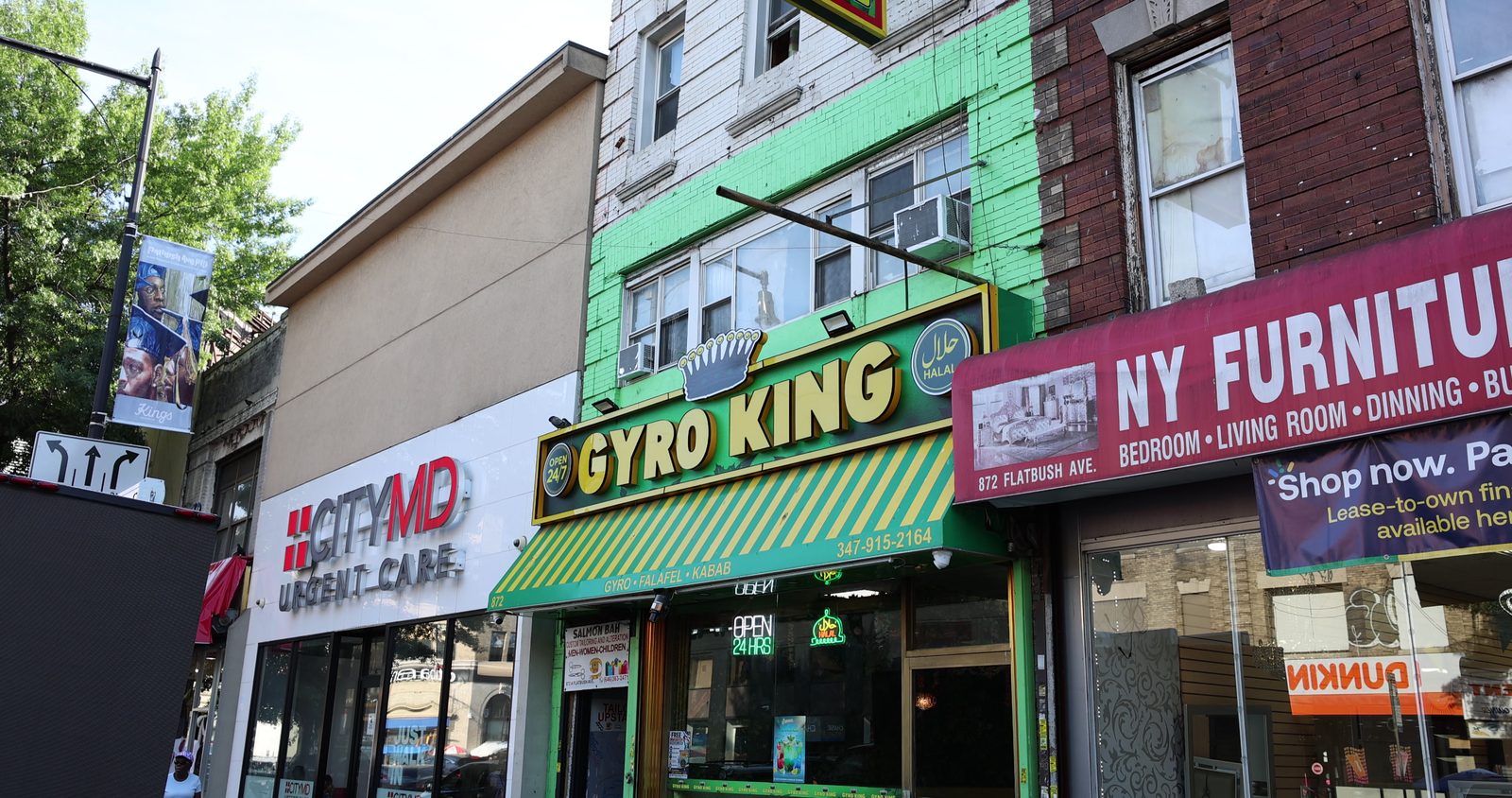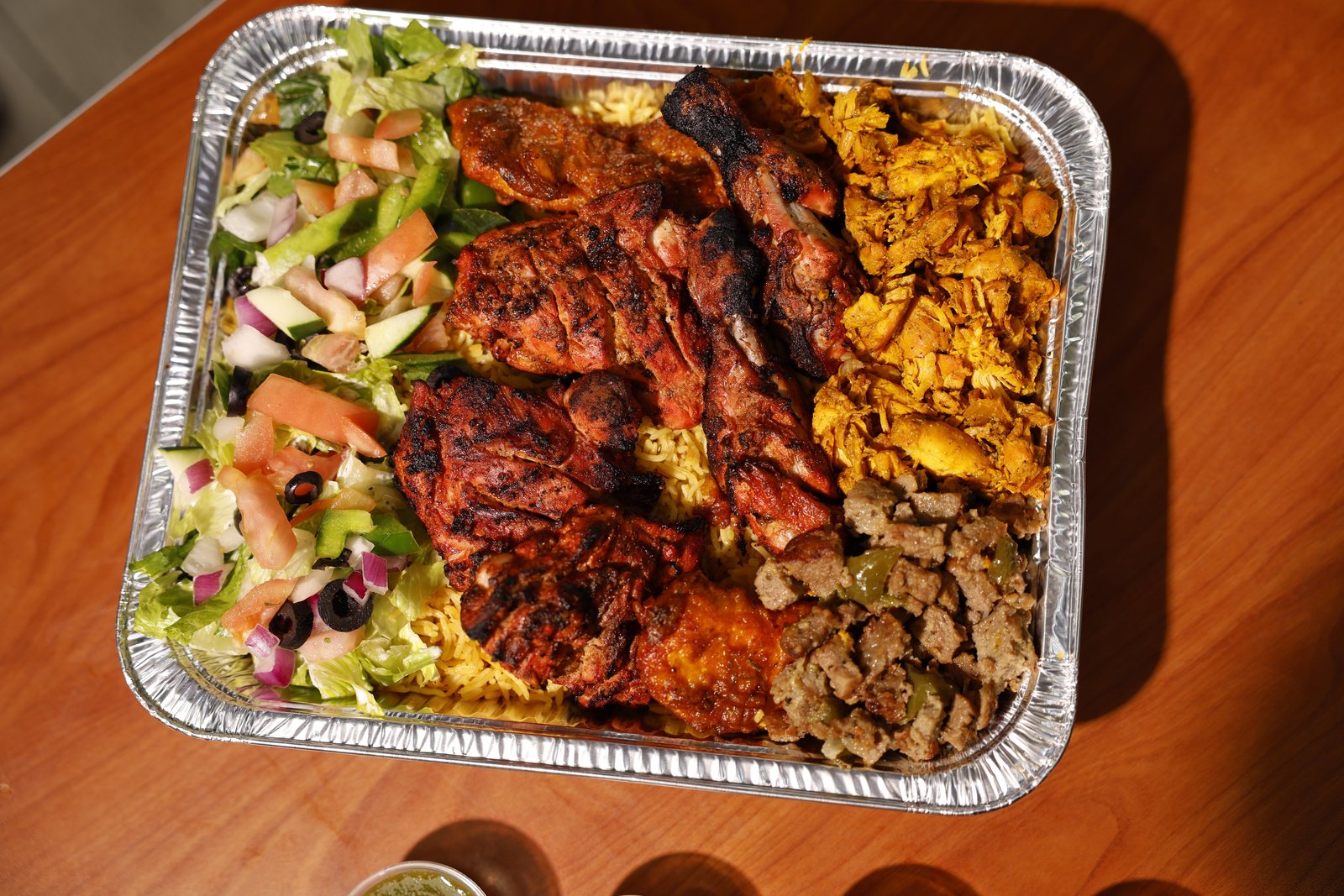
Yes. Instagram and delivery apps are great for getting noticed, but they are rented space: the platform decides who sees your posts, what your listing looks like and how customers reach you. A website is the one place online that you own, where your menu, hours, location and ordering are always correct and always yours. It does not need to be big. A simple, fast site that works on a phone is enough for most restaurants.
Plenty of restaurant owners in New York run busy kitchens with nothing but an Instagram account and a few delivery apps, so the question is fair. Here is how we think about it, and what a restaurant website should actually do.
What Instagram and delivery apps do well
Social media is where people get hungry. A good reel of a platter coming off the grill makes someone want to visit tonight. Delivery apps turn that craving into an order without anyone picking up the phone. Both are worth doing, and we make reels for restaurants like Ustaad Smash Grill and Gyro King because they work.
But each one solves a narrow problem. Instagram is built for discovery and mood, not for answering practical questions. Delivery apps are built to sell delivery, and they show your restaurant next to every competitor on the same screen.
What you give up without a website
- Control. The platform can change how your posts are shown, change its fees or change its rules, and you have no say.
- Google searches. When someone types "halal food near me" or the name of your restaurant, Google looks for a real website with your menu, address and hours as text. An Instagram profile rarely answers that well.
- Direct orders and catering. Customers who want to call, order pickup or ask about a tray for an office lunch need a clear place to do it. A catering page with your tray options brings in larger orders that a delivery app won't.
- Trust. Many people check for a website before they book a table or a catering order. No website can make a good restaurant look closed or temporary.
- Your customers. A follower belongs to the app. A website visitor who orders from you, joins your list or calls you is a relationship you keep.
Post on Instagram to get noticed, but send people somewhere you own when they are ready to order.
What a restaurant website actually needs
You don't need a large site. You need a few pages that answer the questions a hungry person has on a phone, standing on a corner in Flatbush or scrolling on the train home.
- 01
Order and call buttons up top
Order Now, View Menu and a tap-to-call button on the first screen, so nobody has to scroll to act.
- 02
The menu as real text
Your full menu typed on the page, not a PDF or a photo of a paper menu. Google can read text, and people can read it on a small screen.
- 03
Hours, address and a map
Exactly the same as your Google Business Profile and your delivery listings, including late-night and holiday hours.
- 04
A catering page
Trays, how far ahead to order and who to contact. This is often the most valuable page on a restaurant site.
- 05
Real photos of your food
Your own dishes, shot well. Stock photos never match what arrives on the plate, and customers can tell.
- 06
Locations, if you have more than one
A page per location with its own address, hours and phone number, so each one can show up in local searches.
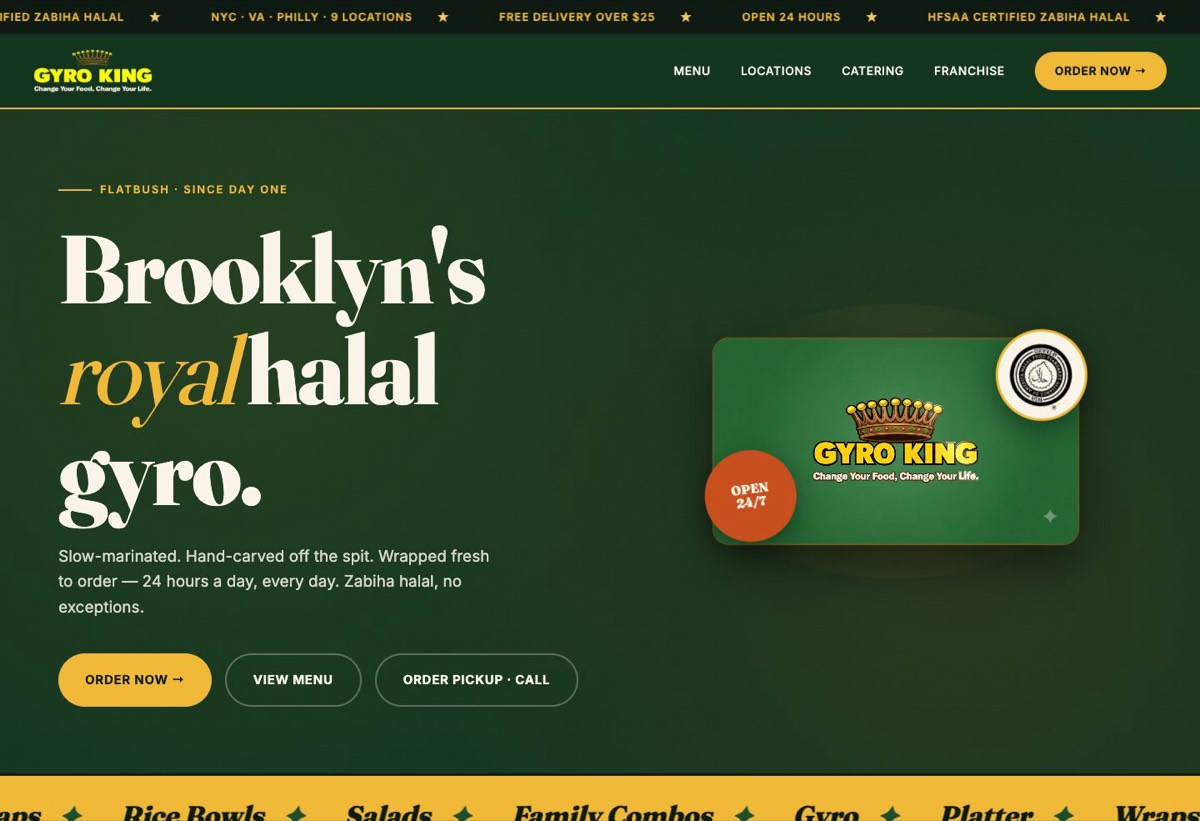
On the Gyro King website, the top of the page says what they serve and where, shows they are open around the clock and zabiha halal, and puts Order Now, View Menu and a call-to-order button right there. The header links to the menu, locations, catering and franchise pages, so every kind of visitor finds their page in one tap.
How the website and Instagram work together
It is not one or the other. The best setup uses each channel for what it does best, and connects them:
- Put your website link in your Instagram bio, and point it to your menu or ordering page rather than just the homepage.
- Mention the catering page in posts and stories when you show a tray or a big order going out.
- Use the same photos and dish names on your website, Instagram, delivery apps and printed menus, so everything feels like one restaurant.
- Link your website from your Google Business Profile, and keep both updated together whenever your hours or menu change.
- Add a QR code to table tents and takeout menus that opens your website, so dine-in customers can find you again later.
When a simple page is enough
A brand-new food cart or pop-up can start with a single page: what you sell, where you are today, your hours, your menu and your Instagram. That is still far better than nothing, because it gives Google and customers one reliable source of truth. As you add a storefront, catering or a second location, the site grows with you.
What matters most is that the domain and accounts are in your name, so the site stays yours if you ever change who looks after it. Cost depends on how many pages and features you need, such as online ordering or catering forms, so see our pricing page or contact us and we will scope it with you.